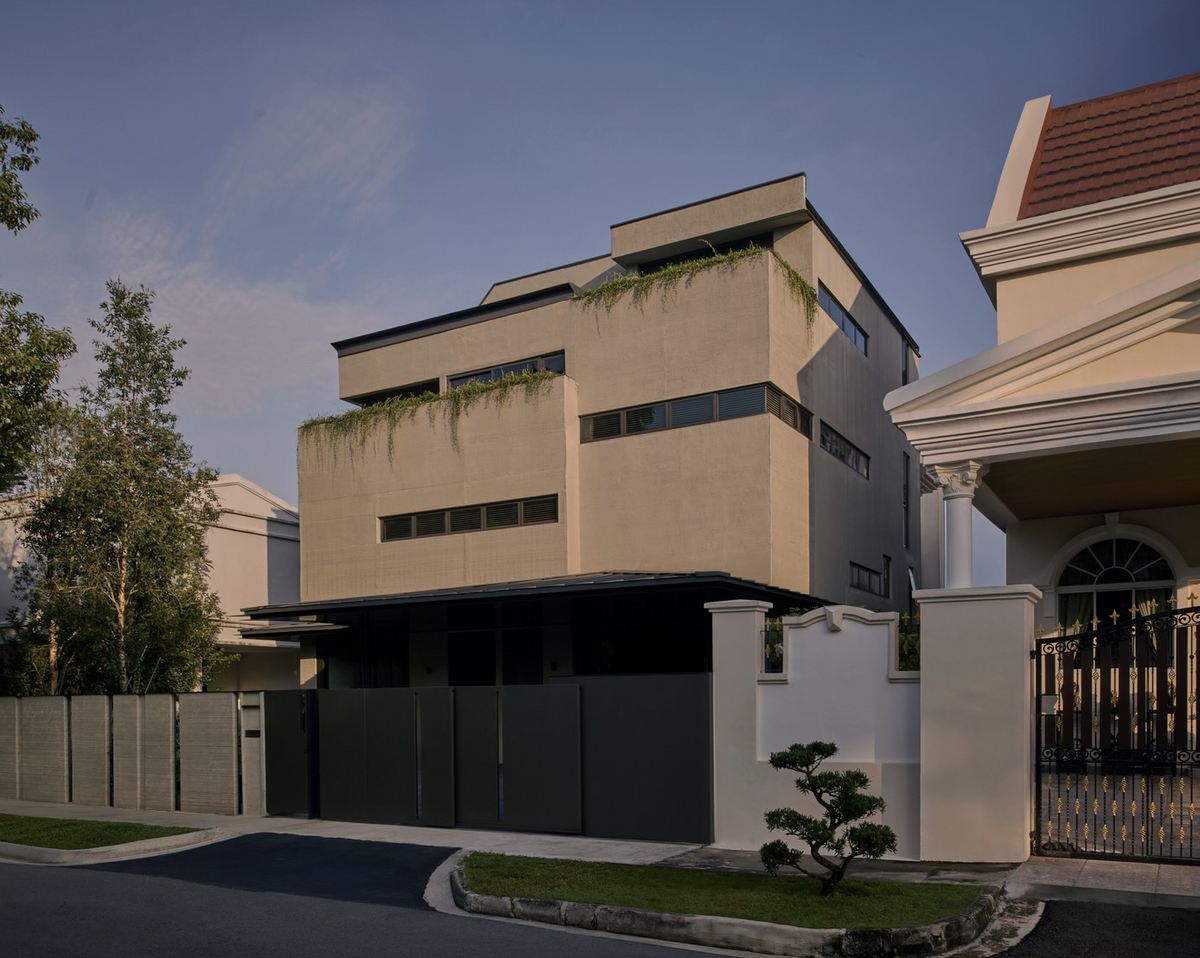
By embracing 3D concrete printing, Park + Associates created a home that is both technologically ambitious, emotionally resonant, and a prototype for the future of Southeast Asian housing.
Conceived and delivered by Park + Associates, QR3D is more than just Singapore’s first 3D-printed house. It represents a compelling shift in how homes can be designed, built and experienced. Born out of a desire to reimagine a family residence and shaped by the practical constraints of a post-pandemic construction climate, QR3D offers a grounded yet innovative take on digitally fabricated architecture.
The team had long held an interest in alternative construction methods, and a convergence of factors: a family home due for renewal, industry-wide labour shortages and rising construction costs made the timing for 3D concrete printing (3DCP) especially opportune. Despite its groundbreaking construction method, QR3D was not conceived as a technological showcase.
“Designing the house, we were always aware that it is first and foremost a family home, one that needed to be comfortable, functional, to withstand the test of time, and to remain respectable in decades to come.”
That perspective informed every design decision from start to finish.
Designing Beyond the Machines
In contrast to many 3D-printed projects that are shaped heavily by machine capabilities, Park + Associates made the conscious decision not to let the technology dictate the architecture. The early stages of design, concept and schematic, followed the firm’s usual processes, rooted in creating strong, quality-driven spaces.
Only during design development did the possibilities and constraints of 3DCP begin to shape the building’s details. Collaborative discussions with CES_InnovFab, the construction technology partner, led to minor refinements in the design, but none so significant as to alter the project’s intent.
“We set out to challenge the perception of technologically driven architecture as being speculative or cookie-cutter,” the team explained. “It was most important to us to create emotive spaces that people will find joy, delight, and comfort living in.”
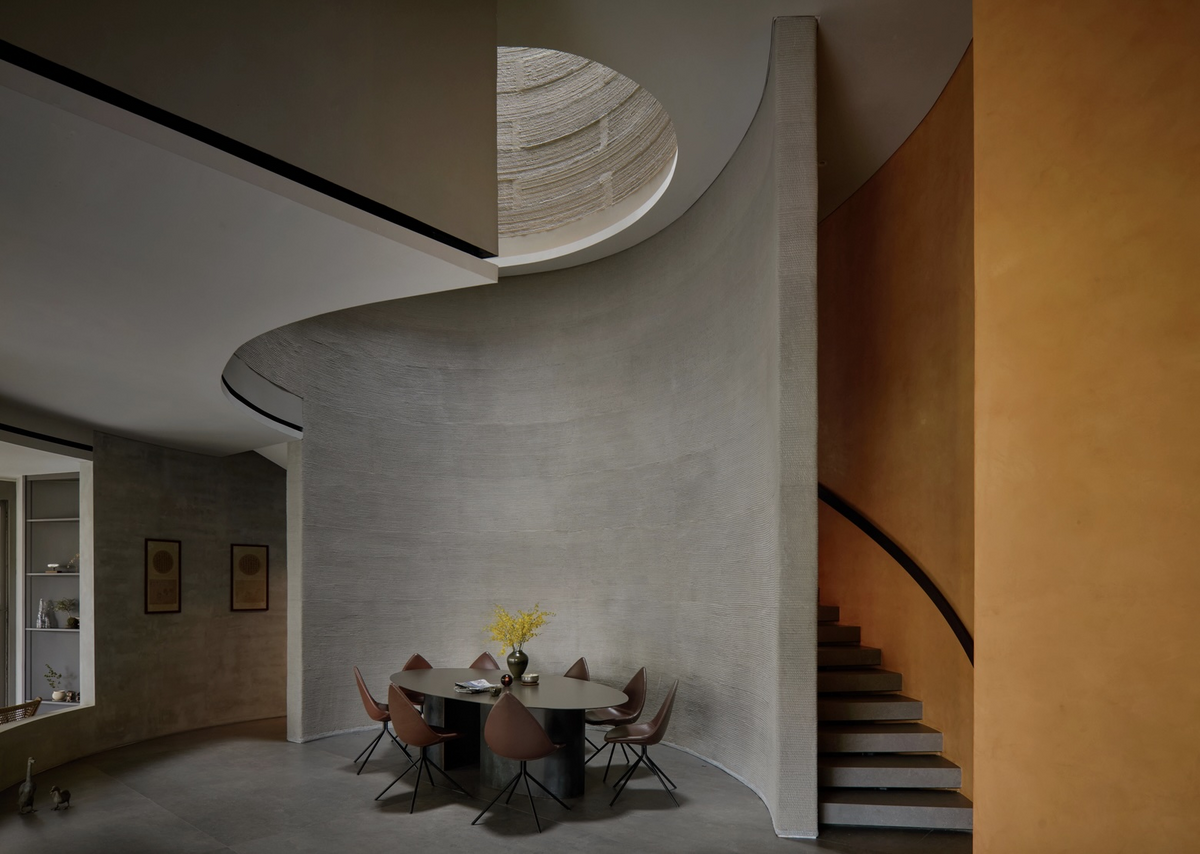
The oculus, one of the home’s most striking features, illustrates this approach. Originally designed at a steeper incline, it had to be adjusted to suit the constraints of the available concrete mix. It was ultimately printed in sections and assembled on-site. While demanding in execution, the final result remains true to the spirit of the original design.
On-site Innovation in a Tropical Climate
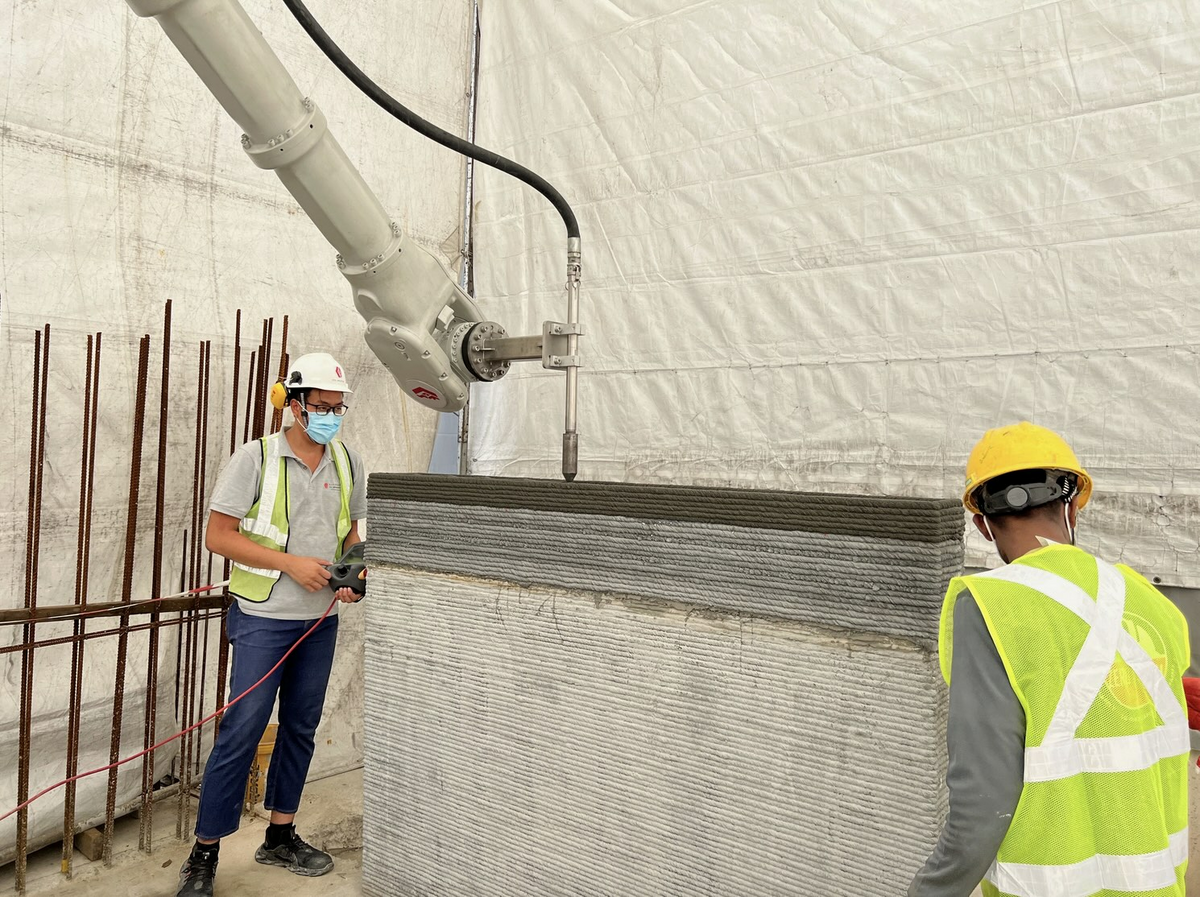
Concrete printing in Singapore’s humid, rain-prone environment brought significant challenges. To mitigate the effects of weather, the project combined in-situ printing,protected by weather-controlled tents, with off-site prefabrication of wall panels.
Park + Associates and CES_InnovFab worked closely to adapt construction workflows for the tropical context. While dramatic failures were avoided, the team faced numerous smaller challenges that required problem-solving beyond conventional norms. “One example is ensuring watertightness where external doors and windows meet with the layered 3D-printed walls,” they recalled.
The success of these solutions relied heavily on close teamwork and a shared willingness to experiment and iterate in real time. Material development was another key aspect. CES_ InnovFab led the calibration of the concrete mix for printability, strength and long-term durability, with the architectural team involved throughout the process. While the 3D-printed elements form the building envelope, structural integrity is ensured through conventionally cast reinforced concrete columns. Technologies such as steel fibre-infused concrete were not available at the time, though they remain promising avenues for the future.
Rethinking Workflows and Roles
The integration of 3D printing into the construction process required the architectural and contractor teams to learn and adapt on the go. There was no formal restructuring or retraining. Instead, the project relied on a higher level of involvement and coordination, with the architect playing a more hands-on role than usual.
Internally, Park + Associates acknowledged the increased resource demands – more thinking, more coordination, more creative problem-solving. Yet these investments have paid dividends.
“As an office we are now more equipped to take on more 3DCP projects, and perhaps even projects with other conventional construction methods.”
From a regulatory perspective, there was no outright resistance, but the novelty of the approach demanded more rigour and attention. The result is a project that has equipped the firm with a deeper, more nuanced understanding of how emerging technologies can be integrated into local construction ecosystems.
Cost, Waste and the Question of Scale
One of the most common assumptions about 3D-printed buildings is that they will cost significantly more. In the case of QR3D, Park + Associates reports that costs were comparable to a conventionally built home of similar scale and complexity. This parity is expected at this early stage, but the team believes broader adoption will bring meaningful reductions in both time and resources.
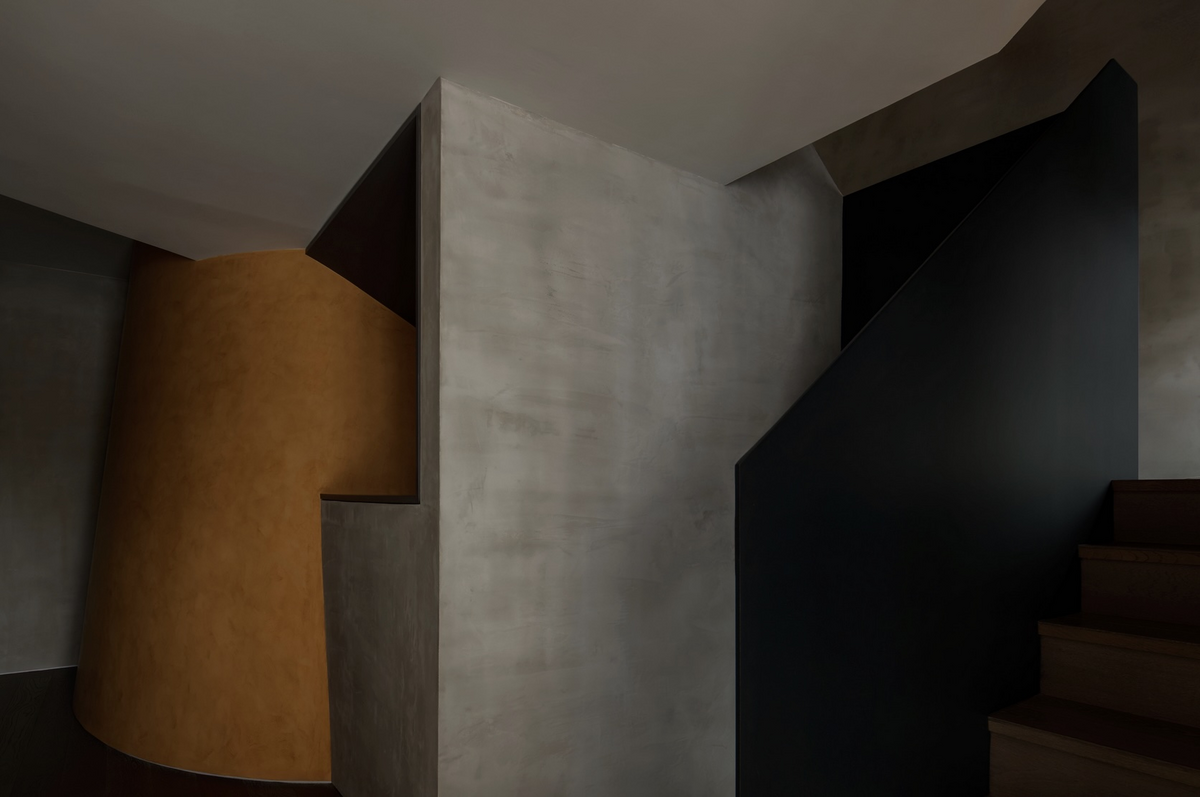
Time and labour savings were already evident in this build. The walls, printed directly, eliminated the need for timber formwork and removed entire layers of trade-based work such as bricklaying, plastering and painting.
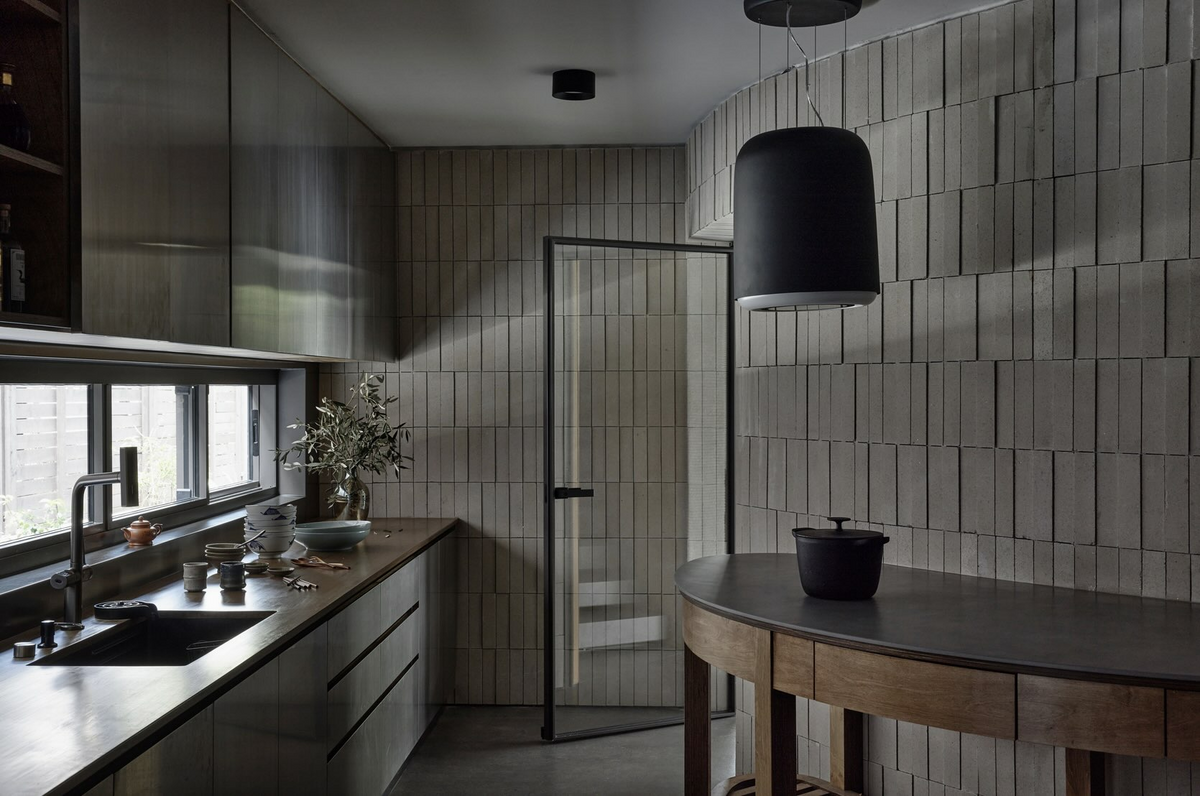
“We got away without using a single brick in the house,” the team noted.
Beyond savings, 3DCP offered other advantages, particularly in the ability to quickly prototype components and explore design iterations in real time. This agility proved valuable not just to the architects but also in facilitating faster client approvals and construction decisions
The team sees significant potential for 3D printing to scale beyond bespoke residences. They cited CES_InnovFab’s work on prefabricated bathroom units (PBUs) for multi- residential buildings as an example of how the technology can be applied in modular ways.
“3DCP is absolutely scalable, and in fact has done so elsewhere.”
What is needed, they believe, is more awareness, education and investment in research and development to bring the technology into broader use.
Lessons and Reflections
QR3D was approached as a prototype, and the process brought valuable insights into the unique design and construction challenges of 3D-printed architecture. While the team stands by every decision made, the experience has deeply informed their approach going forward.
It also prompted a wider reflection on how technology is reshaping the architectural profession. Park + Associates sees the role of the architect evolving, not to be replaced by machines, but to work in concert with them.
“With robotics and automation, our role may evolve, for example, to designing more processes rather than buildings.”
This future, they suggest, could see architects acting as mediators between machine efficiency and human experience.
“Perhaps the architect’s role may evolve to focus on meaning, community, atmosphere, and sustainability; qualities that automation cannot decide.”
Ultimately, QR3D is a compelling case study in how architecture can embrace advanced tools without losing sight of its human purpose. It is a bold step into the future, but one grounded in a deep respect for lived experience and architectural integrity. As housing demand rises across Southeast Asia and construction challenges mount, QR3D offers a roadmap for how technology can be harnessed to build better, faster and more sustainably without sacrificing the soul of architecture.