Arup has published new guidance on a new more circular approach across both new-build and retrofit projects for the property industry, with a greater focus on keeping buildings and materials in use for longer.
Construction consumes around half of all raw materials extracted globally, and every week the world adds new buildings equivalent to the size of Paris. Report authors argue that the sector can cut costs, carbon and waste by keeping structures in use for longer and reusing more components when buildings change.
Global built environment consultancy Arup’s new Reuse Playbook, created in partnership with the Ellen Macarthur Foundation and Circular Leaders Group, responds to one of the sector’s most persistent barriers: uncertainty over the performance and reuse potential of existing structures and reclaimed materials. The guidance gives a practical roadmap for developers, designers, contractors and insurers to bring more materials back into circulation and reduce the amount sent to landfill. It sets out:
- How design teams can use tools such as digital material passports and advanced testing methods to make reuse, recycling and upcycling more predictable and commercially viable.
- How reuse can retain value that is often lost through material depreciation and premature demolition.
- How the future value of components, whether through salvage, reuse, or recycling, can be integrated into cost plans and sensitivity testing, turning a perceived cost into a measurable long-term benefit.
- How external pressures, including as carbon taxes, subsidies, government mandates, and ESG commitments, create incentives that strengthen the financial case for reuse and recycling.
Anthony Chiu, APAC Property, Science and Industry Leader, Arup, said: “Property developers cannot afford to ignore the commercial benefits of circular design and material reuse. Now more than ever, technological innovations and AI offer more opportunities to better understand the condition and potential of existing buildings and their components. This enables retrofit, reuse and upcycling to be scaled and become more commercially viable. As an industry, we are glad to see enhanced incentive to move away from demolition being the default position.”
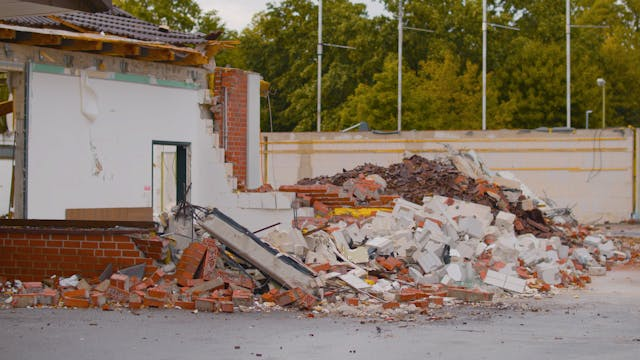
In Singapore, policy and industry measures are helping shift attention towards retaining value in existing buildings – such as pre-demolition audits and site waste management which maximises material recovery for reuse and recycling. The guidance also outlines the roles of developers, designers, contractors and insurers in bringing reclaimed materials back into circulation and integrating them into new schemes. In addition, it argues that clearer data, better testing and more consistent processes can help developers and insurers make decisions with greater confidence, particularly on complex retrofit schemes.
The challenge facing the property sector is reflected in the fact that an estimated 10 percent of the 40,000 tall buildings around the world are nearing the end of their life and are likely to face demolition. Many of these buildings are structurally sound but could be upgraded to meet modern building standards and commercial requirements, making the case for greater reuse and recycling in the construction sector even stronger.
Quay Quarter Tower: A Global benchmark for Upcycling
One example of upcycling in action is Sydney’s Quay Quarter Tower project – widely recognised as the world’s first upcycled skyscraper and recently named a finalist for the Earthshot Prize. By retaining and reimagining the existing structure, the project demonstrates how upcycling can deliver high performing, commercially competitive buildings while dramatically reducing carbon.
The project retained 65 percent of the original floorplates and structure, preserved 98 percent of structural walls and core, saved 12,000 tonnes of embodied carbon, and became the first commercial tower to retrofit double deck lifts, freeing 120 m2 per floor and avoiding nine lift shafts. Quay Quarter Tower is managed by Dexus and owned by Dexus Wholesale Property Fund (DWPR), Mirvac Wholesale Office Fund (MWOF) and Rest.
AI and Digital Tools Increase Confidence
Guidance authors also point to advances in AI and digital tools which are rapidly reducing the uncertainties that have long made reuse and upcycling difficult to assess, giving project teams clearer evidence about what can be retained, refitted or reclaimed. Recent examples include:
- AI-driven vibration assessments: In London, Arup used machine learning to analyse a 29 storey 1960s office tower, significantly reducing the required strengthening works and improving overall project viability for refurbishment rather than demolition.
- Immersive 3D modelling to test retrofit options before construction, allowing teams to compare scenarios and avoid unnecessary interventions.
- Digital material passports mapping the condition and reuse potential of thousands of components on projects such as the Circular Building and major refurbishment schemes.
- Advanced structural testing: At Euston Tower, Arup extracted and tested cast in-situ concrete slabs for use as new “precast” elements, demonstrating their strength and enabling one of the earliest examples of structural concrete reuse.
Anne-Sophie Duret, Green Business and Circularity Lead at AXA said: “From an insurance perspective, wider adoption of reuse will depend on clear professional recommendations, stronger evidence on performance and more consistent standards across the market. Practical guidance like this from Arup can help developers, designers and insurers make better-informed decisions about the reuse of materials and existing structures, particularly on complex projects where confidence and clarity are essential.”