Singapore’s construction sector is booming, but as the government tightens foreign worker quotas, the industry faces a critical labour shortage. Global construction consultancy, Linesight, discusses how Singapore’s infrastructure ambitions may be at risk.
Although Singapore is benefitting from a surge in large-scale construction projects with demand projected to reach S$38 billion by 2028, questions remain about where the labour workforce will come from to build the planned projects. The island nation’s construction sector relies heavily on foreign labour as part of its long-time strategy of augmenting its workforce with a large pool of foreign labour.
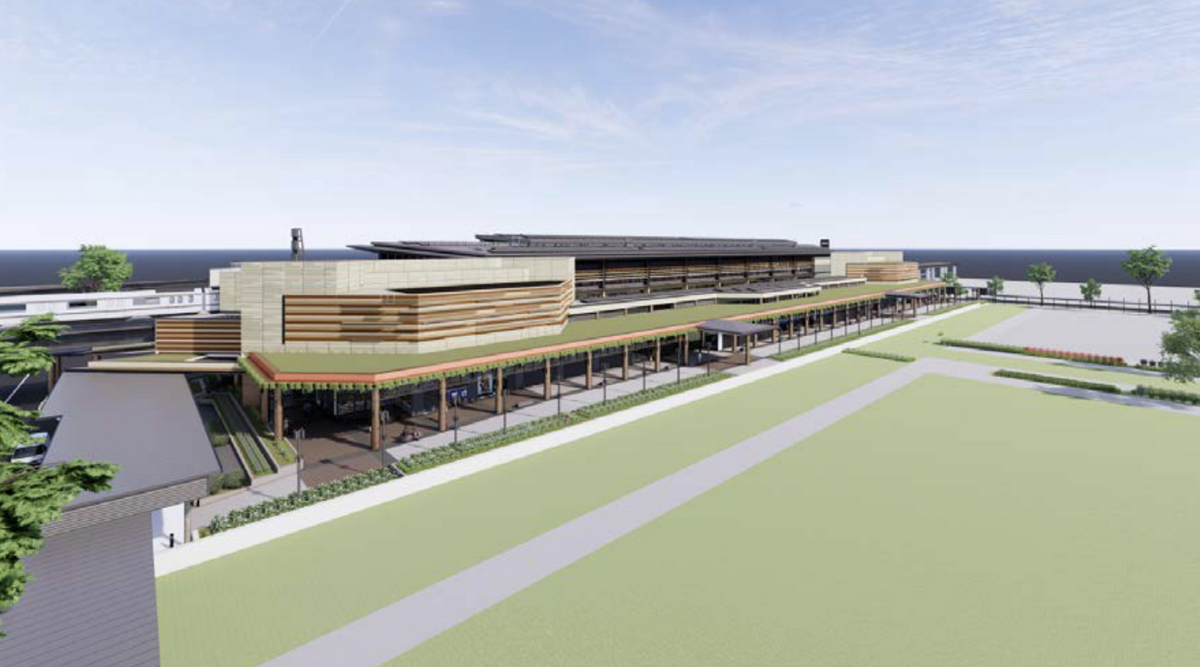
As of December 2023, close to 30 percent of its total foreign workforce comprised work permit holders in construction, marine shipyard and process (CMP) industries. But a 4.2 percent tightening of foreign worker quotas in construction from 1 January 2024 as part of a government plan to ‘transform the sector’ is seemingly at odds with the pipeline of large projects which includes increasing numbers of data centres, hospitals and the planned construction of Changi Airport’s Terminal 5, anticipated to commence in 2025.
The Singapore Contractors Association has supported the government quota reduction,saying the industry needs to become more ‘manpower lean’, to increase post-pandemic resilience. In the past four years, construction companies have been encouraged to digitalise their operations to reduce manpower needs, however slow uptake has been largely attributed to a lack of incentives. With the Man-year Entitlement scheme reaching its conclusion at the end of 2024, the focus on a leaner workforce will become more critical.The contractor’s association also says that quota changes aim to “incentivise firms to hire higher-skilled foreign workers”.
Yet recruiting skilled labour also remains a significant challenge for the construction industry. There is a scarcity of skilled labour resources to manage the rising scale of construction projects.Additional pressures may also stem from neighbouring markets in Malaysia or other tier-1 markets like Japan, which are looking to ramp up construction projects in similar sectors. Businesses are likely to headhunt in the same talent pool of skilled candidates in an already competitive market.
Steps to Turn the Tide
One strategy may be to raise the capability and capacity of homegrown workforces, but although Singapore is producing an increasing number of engineering graduates, the reality is that many of these local skilled resources do not always flow to the construction industry.Engineering students today prefer to join aerospace or defence industries after graduation,amidst an influx of aerospace investments and hiring in Singapore.
To counter this trend, the government recently established a new task force to improve the image of construction and architecture jobs, aiming to attract more young talent to these sectors and promote sustainable practices.A campaign has also been launched to highlight the industry’s job diversity and contributions to Singapore’s infrastructure. Additionally, the government plans to implement an enhanced Standard Consultancy Agreement from 1 November to ensure fair remuneration and balanced project risks for consultants. Educating and nurturing the next generation of talent will be critical to meet medium to long-term skilled labour requirements.
Another strategy which the BCA is encouraging is a push towards leaner and more efficient construction methods through the Off-site Levy Scheme, such as pre-fabrication and off-site construction, as seen in the oil and gas, and marine industries. Data centre projects are already employing technologies such as predictive analytics and Artificial Intelligence, as well as the Design for Manufacturing and Assembly (DfMA) methods to streamline processes, thus improving efficiency and alleviating some of the pressure from labour constraints.
A Holistic Approach is Needed
As it stands, the current labour challenges are not going away anytime soon and addressing this requires a holistic approach, cutting across both public and private sectors. There is a need to shift ingrained perceptions and encourage graduates of today to start perceiving the construction industry as a viable career path that offers unparalleled job prospects. Cross-collaboration and conversations across public and private sectors, through industry conferences, career fairs and scholarships will remain pivotal to ensuring the continued growth and education of the workforce, while facilitating open conversations.
Resource-scarce Singapore has always relied on its people for growth. The nation has long seen a clear link between a strong workforce and a strong economy, but the pandemic drove home the need for greater resistance to potential foreign labour supply disruptions. There is no ‘perfect’ time to pull the levers necessary to shift dependency on foreign labour and if that time is now, the market will take some of the short-term pain in the form of labour supply bottlenecks.
The local labour force must become an integral part of the solution. Without the backing of a skilled labour force, Singapore cannot labour on.