
The pressure to build faster is changing how construction projects are designed and delivered. Across Asia Pacific, developers and contractors are increasingly relying on prefabrication, standardised designs and digital tools to shorten timelines and manage complex building requirements. The real test of these projects begins after practical completion. The long-term value of any building depends on how it performs once the keys are handed over, not on how quickly it was delivered.
A compressed construction schedule does not reduce the operational demands a building will face over decades of service. Decisions regarding design codes, materials, system integration, and maintenance access dictate performance long after construction ends. When acceleration reduces the time available to validate these choices, it risks locking owners into vulnerabilities that are costly and difficult to rectify later. We have seen cases where incorrect earthquake design codes were used at the design stage, resulting in additional costs for extra structural works to address the deficiencies. To avoid this, operational, maintenance, and restoration strategies must inform the earliest stages of the design process.
Data Centres: Infrastructure at the Limit
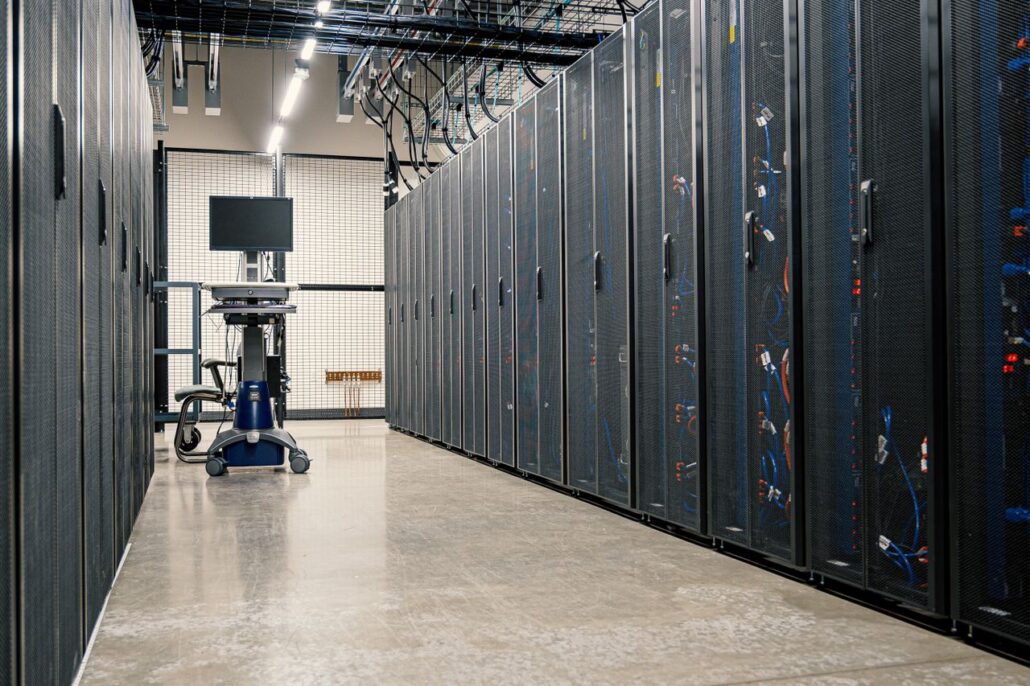
The high-stake nature of modern construction is especially visible in the rapid expansion of data centres in Southeast Asia. These facilities demand a precise, constant equilibrium between power supply, water usage, and cooling systems. Their resilience is inseparable from the resilience of the surrounding infrastructure.
As Zurich’s Beyond 2030, The Future of Construction report reveals, a hyperscale data centre may require up to 19 million liters of water daily for cooling. This level of demand makes rigorous site selection nonnegotiable. Local water availability, competing demand from other users, and evolving drought and heatstress risks must all be understood in detail. The same applies to power: Grid reliability cannot be assumed based solely on the initial connection agreement. With the recent developments of new grid access rules across Asia Pacific, we need to assess how heat, flooding and clustered network demand could impact electricity supply over the entire lifespan of the asset, not just in the first few years.
True redundancy requires a deep analysis of shared dependencies. Multiple supply routes offer little protection if all are vulnerable to the same environmental event, such as a localised flood. Backup generation and storage can improve continuity, but they also introduce complex integration and commissioning requirements. These systems demand specialist expertise – a scarce resource that, if bypassed to save time, leaves critical interactions untested.

The Hidden Risk of Multiplied Defects
Prefabrication and modular construction offer real advantages by moving labour into controlled environments, improving quality and reducing onsite effort. However, the same repeatability that drives speed can also become a liability. If a design flaw exists, it is replicated across an entire portfolio. We have seen cases where seemingly minor sealing defects in standardised fire sprinkler heads led to widespread, costly recalls years after installation, or where incorrect waterproofing details at module interfaces in Modular Integrated Construction (MiC) residential buildings resulted in systemic leakage issues.
These risks are particularly acute on projects with a high concentration of values, such as vibration problems affecting all cooling modules on Data Centre MEP (Mechanical, Electrical and Plumbing) skids, or airleakage pathways repeated across semiconductor cleanroom modules. This is the “replication risk” that owners and contractors must manage; by paying close attention not only to individual modules, but especially to the design and execution of their interfaces.
From a risk perspective, the answer is to build in a defined learning phase between early deployments and fullscale rollouts. Early installations are treated as a “prototype” to monitor performance, recording defects and an opportunity to test inspection, maintenance and repair protocols, and to feed realworld performance data back into design specifications. That feedback loop ensures that subsequent iterations are improved rather than entrenching hidden weaknesses.
Digital tools such as Building Information Modelling (BIM), digital twins and QR Codes are invaluable for tracking performance such as installers, batch numbers, test results and locations, and managing complexity but their value is limited by the quality of the data they ingest. A digital model cannot confirm that an enclosure is watertight or that commissioning is fully complete. Site verification remains the only way to close the gap between digital insight and physical reality.
At the same time, reliance on digital platforms introduces new systemic risks. If design data is corrupted or platforms become hacked or inaccessible, multiple projects can be disrupted simultaneously. Robust data integrity, backup strategies, and supplier access controls must now be treated as core elements of project assurance.
Closing the Gap at Handover
The most critical moment for a project’s future is the transition from construction to operation. Often, design and construction teams hold a wealth of knowledge that never reaches the facilities managers who inherit the asset. Compressed schedules frequently result in incomplete documentation, unresolved commissioning issues, late involvement of facilities managers, and digital models (such as BIM or digital twins) that are not updated in a timely manner. Maintenance responsibilities can also become vague or fragmented. Together, these factors force operations teams to manage buildings without a clear understanding of how systems are intended to perform.
To counter this, facilities teams should be involved from the design phase onwards, shaping decisions on maintenance access, testing and commissioning as well as operational requirements and resilience provisions. Effective handover protocols must go beyond a box of manuals. They should provide verified installation and commissioning records, clearly document outstanding defects and responsibilities, and reserve sufficient time in the programme to test and rectify failures before the building is fully occupied. This is not an administrative detail; it is a fundamental driver of longterm performance and risk.
Designing for a Changing Climate
As climate conditions across Asia Pacific evolve, buildings designed solely against historical weather patterns risk early obsolescence. We must anticipate how materials and assemblies will age under increased heat, moisture, stronger typhoons, more intense rainfall and higher flood exposure. Temporary protection or drainage system during construction must not be under- designed. Special attention is also required at interfaces where different materials meet, as these are often the first points of failure.
These joints, seals and transitions should be designed for easy inspection, access and replacement. Facades, roofs and insulation systems that cannot be maintained without major demolition or additional cranes create a situation where localised damage can trigger disproportionate disruption. A more resilient approach is to assume deterioration and plan for it, so that replacement becomes a manageable, predictable activity rather than a crisis.
Maintenance strategies also need to evolve in step with these design choices. Larger storm drainage capacity, higher cooling efficiency and envelope integrity should be reviewed regularly against observed deterioration, not just against original design assumptions. In practice, this means pairing technical monitoring with structured site inspections and making it easy for facilities teams to intervene early.
Moving Resilience into the Design Brief
By the time operational limitations emerge, the cost of correction is often prohibitive. That is why resilience must be embedded as a central pillar of the initial investment case and design brief, not treated as a latestage addon. In practical terms, developers and institutional owners should define their tolerance for downtime well before procurement begins. Critical dependencies, such as power, water, digital platforms and supply chains, need to be identified clearly, so that design, site selection and contract structures all reflect the true risk profile of the asset.
Contractors, for their part, require unambiguous accountability at every interface and a programme that treats commissioning time as nonnegotiable, even under schedule pressure. Engaging risk and resilience expertise early enables project teams to expose vulnerabilities while they are still relatively inexpensive to address. The goal is not simply to deliver projects faster, but to ensure they perform reliably for decades after completion.