Sean Baptist, Asia Pacific Channels & License Compliance Lead at Trimble AECO, discusses how AI is reshaping construction project planning, execution, and risk management.
Artificial intelligence is rapidly redefining the construction industry, ushering in a new era of precision, efficiency, and risk mitigation. As projects grow in complexity and scale, AI-powered tools are enabling teams to anticipate challenges, optimise resources, and streamline workflows in ways previously unimaginable. This transformation is not just technological. It’s cultural, shifting construction from traditional, labour- intensive methods toward dynamic, data-driven processes that balance innovation with human expertise.
Building Review Journal (BRJ): In your view, how does AI fundamentally change the way construction projects are planned, executed, and monitored? What are the biggest shifts we are seeing in project management due to AI integration?
Sean Baptist (SB): By leveraging AI, construction teams can predict challenges, optimise resources, and make smarter decisions. The construction industry can shift from reactive problem-solving to proactive, data-driven decision-making, which directly impacts cost, efficiency, and mitigate risks at an early stage.

Take the Museum of the Future in Dubai as an example. From the earliest stages, AI allowed the team to simulate multiple design alternatives, factoring in material cost, lifecycle complications, sustainable design, and overall project efficiency. By using laser scanning and AI-powered analysis to compare as-built conditions against the 3D model, the team achieved a 65 percent reduction in rework, improved safety, and accelerated project delivery.
Using Trimble Connect, an open collaboration platform, the project execution team was able to give the right people timely access to the necessary data, enabling a smooth, integrated construction process and significantly saving time and resources. This demonstrates the fundamental shift AI brings.
Construction is no longer a linear process prone to delays and overruns. It has become a continuous, intelligent workflow where insights drive smarter decisions at every stage, delivering faster, safer, and more predictable outcomes.
BRJ: How do you see AI complementing human expertise on the job site rather than replacing it? What roles will human workers still play as AI becomes more embedded in construction processes?
SB: By automating repetitive, time-consuming tasks and processing vast amounts of data, AI frees the workforce to focus on higher-value work: creativity, problem-solving, judgement, and decision-making. In construction and infrastructure projects, for example, AI can analyse BIM models or reality capture data at scale, detect clashes, and flag deviations in real time, which are tasks that would take humans weeks to complete. This enables engineers and project teams to focus on interpreting insights, refining designs, managing risks, and ensuring quality and safety.
BRJ: AI can lead to faster, more efficient processes, but also to job displacement. Is this a concern for the construction industry? If so, how can AI be implemented in a way that benefits both productivity and the workforce?
SB: While concerns about job displacement are understandable, the construction industry faces a much larger challenge: a significant skilled labour shortage. Construction is often seen as labour-intensive and physically demanding. Combined with long hours, safety risks and outdated workflows, this industry has seen a drop in overall new workforce. Rather than replacing jobs, AI can address the root of the problem – easing workloads, reducing repetitive tasks, and enabling smarter decision-making.
BRJ: How accurate can AI’s predictive analytics be when forecasting outcomes such as project timelines, costs, and resource allocation?
SB: AI’s predictive analytics for timelines and costs are becoming increasingly accurate, thanks to advances in machine learning, data integration, and real-time monitoring. In construction, tools like Trimble Connect and AI-enabled BIM systems analyse historical project data, current site conditions, supply chain factors, and even weather patterns to generate highly informed predictions.
Accuracy depends on the quality and completeness of the input data. In mature projects with detailed BIM models and robust real-time updates, predictive analytics can achieve accuracy levels within a few percentage points for cost and schedule forecasts. However, there is always a margin for error – typically between 5 and 15 percent – due to unpredictable factors such as sudden changes in site conditions, supply chain disruptions, or regulatory changes.
The key advantage of AI is not perfect prediction, but early visibility: identifying potential delays or cost overruns before they happen so project teams can take corrective action and reduce risk.
BRJ: How does the AI model handle real- time data from multiple sources (sensors, drones, on-site teams) to ensure that its predictions remain relevant as a project progresses?
SB: The risk of over-reliance comes when teams treat AI as a substitute for human oversight. AI is only as accurate as the data it receives, and it cannot fully account for the nuance of human judgement, creativity, or ethical considerations. Skilled professionals are still essential to interpret AI insights, validate predictions, and make decisions in the context of real-world complexity. The most effective approach is using AI to enhance human expertise while retaining critical oversight and control.
In construction, platforms like Trimble Connect integrate live feeds from drones, IoT sensors, site cameras, and BIM models to give teams an up-to-date view of project progress, safety conditions, and potential issues. AI can then analyse this data instantly, detecting clashes, flagging deviations, predicting delays, and recommending adjustments to keep the project on track.
BRJ: To what extent can AI mitigate common risks like cost overruns and delays?
SB: AI is a game-changer for risk mitigation. It helps identify potential bottlenecks and conflicts such as cost management, quality control and safety long before they occur. AI can indeed foresee issues that experienced managers might miss, particularly when it comes to complex, large-scale projects with numerous variables. While seasoned professionals bring invaluable intuition and experience, AI enhances this by analysing vast datasets to identify patterns and potential risks that may not be immediately apparent.
BRJ: How does AI help construction firms prioritise and respond to those risks? Does AI simply alert project managers to potential problems, or can it also suggest corrective actions?
SB: AI does more than identify risks. It helps construction firms prioritise and respond to them, and can also suggest corrective actions. By analysing historical and real-time project data, AI quickly assesses the severity of issues such as design clashes, schedule delays, or operational inefficiencies, enabling teams to act with precision.

A powerful example is Airbiz, which specialises in airport planning and design. Passenger flow is critical to airport efficiency and safety, and early detection of bottlenecks can transform a project. Using Trimble SketchUp, Airbiz creates early-stage visualisations that simulate passenger movement and operational layouts.
Predictive simulations flag potential bottlenecks and safety risks before they arise, enabling designers to optimise layouts, adjust capacities, and refine plans long before construction begins. By analysing historical data, real-time inputs, and simulation models, AI can generate scenarios that anticipate crowd movements, peak usage times, and potential delays. This allows planners to test multiple solutions in advance, optimise layouts, and make proactive adjustments.
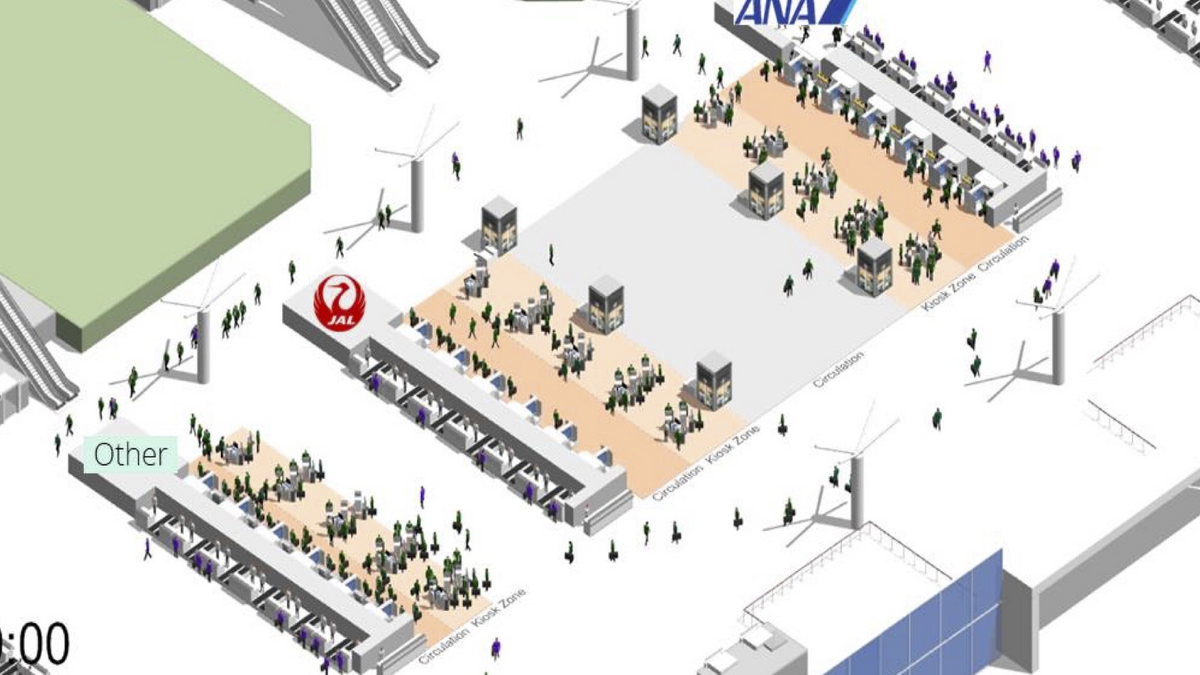
Ruby scripting in SketchUp takes this further by automating scenario testing. Scripts can systematically adjust design parameters, such as corridor width or check-in counter positions, and run multiple variations automatically. Combined with AI analysis, this creates a powerful simulation environment where hundreds of design options can be evaluated quickly, giving teams richer insight without unnecessary site visits or manual rework.
BRJ: Can AI optimise resource allocation in a way that helps reduce waste, increase efficiency, and keep projects within budget? How do AI tools manage competing demands on resources across large, complex projects?
SB: AI significantly optimises construction resource management by moving from reactive guesswork to data-driven forecasting. It helps project teams to analyse aggregated datasets, AI can forecast material, labor, and equipment needs with precision, reducing waste and helping projects stay on budget. In large, complex projects with competing demands, AI can help run simulations based on priorities, offering recommendations to resolve conflicts, such as suggesting the optimal reassignment of a crane across multiple teams.
Crucially, AI is a decision-support tool, not a decision-maker. It illuminates patterns and possibilities, empowering project managers to make the final strategic choices informed by both data and context.
BRJ: How does AI improve supply chain visibility and resource tracking in real time, and what impact does this have on a project’s overall efficiency?
SB: AI helps by providing real-time visibility into these resources, connecting data from design, scheduling, and on-site operations. By analysing this information, AI can alert teams to potential shortages, inefficiencies, or delays, allowing managers to make proactive adjustments.
Automation can streamline processes like invoicing, reducing manual errors, while machine learning identifies patterns in historical data to forecast resource needs and anticipate schedule disruptions. Deep learning can even analyse site images to spot unsafe conditions or misplaced equipment. By integrating AI into workflows, construction teams gain a more holistic view of projects, minimise downtime, optimise resource allocation, and improve overall efficiency, while keeping humans in the decision- making loop to apply context and judgment.
BRJ: Could reliance on AI lead to over-optimisation in certain areas while ignoring others? How do you ensure AI tools keep a balanced approach to resource management?
SB: AI is a powerful tool for improving resource allocation, but it is not a replacement for human judgment. Over-reliance could risk over-optimising certain areas while neglecting others, especially if the AI is working from incomplete data or overly narrow criteria. By using AI to analyse complex project data, AI can detect patterns, anticipate potential issues, and schedule inspections or monitoring activities, while robotics execute these tasks autonomously, even in high-risk or hard-to-access areas.
Customers can oversee operations remotely, reducing safety risks, improving efficiency, and ensuring consistent quality. This approach allows project teams to focus on strategic decision-making, while Trimble’s tools provide the insights and capabilities needed to keep projects on track, safe, and on budget.
BRJ: In what ways do AI tools help mitigate human errors or miscommunications that often lead to delays or cost overruns in construction projects? Can AI systems truly “speak the language” of every project stakeholder, from contractors to engineers to clients?
SB: AI tools help reduce human errors and miscommunications by automating repetitive tasks, standardising workflows, and providing real-time insights. For example, AI can flag inconsistencies in models, detect clashes, monitor resources, and alert teams to potential scheduling conflicts, helping to prevent delays and cost overruns. However, construction remains very human-centred.
Projects are dynamic and unpredictable – weather changes, site conditions, and unforeseen challenges require human judgment, intuition, and empathy. Face-to-face communication and on-site decision-making are still vital for interpreting context, coordinating teams, and making real-time adjustments. AI enhances efficiency and supports decision-making, but engineers, site managers, and construction professionals remain essential to ensure safety, quality, and successful project outcomes.
BRJ: What are some of the biggest hurdles in getting construction firms to adopt AI, and how can the industry as a whole overcome them?
SB: While AI offers clear benefits in construction such as improved efficiency, risk detection, and resource management, it is not a standalone solution. Successful adoption requires accurate, comprehensive, and timely data, as well as strong integration with existing workflows and human expertise.
Common hurdles include high upfront costs, lack of skilled personnel, and the challenge of standardising and maintaining the large volumes of data required for AI systems to work effectively. To overcome these barriers, the industry can focus on incremental adoption, starting with AI tools that automate repetitive tasks or enhance existing systems.
BRJ: How do construction firms address the challenge of collecting, standardising, and maintaining the vast amounts of data needed to train AI systems? Are there concerns about data privacy or security, especially on large, complex projects?
SB: AI in construction depends on high-quality, well-organised data to generate reliable insights. Collecting, standardising, and maintaining this data is a challenge, particularly on large, complex projects. To address this, firms need to invest in robust data governance and standardised processes for data collection, validation, and maintenance.
BRJ: With AI’s increasing role in construction, how do you foresee the ethical implications of its use, particularly regarding data ownership, privacy, and the potential for bias in predictive analytics?
SB: Projects generate vast amounts of sensitive data, ranging from design plans to personnel information, making data ownership and privacy critical. Clear protocols for who can access, use, and store data are essential to protect stakeholders and comply with regulations.
Bias in predictive analytics is another important concern. AI models trained on historical project data can unintentionally reinforce existing inequities or flawed assumptions if the data is incomplete or skewed. Mitigating this risk requires diverse datasets, transparent algorithms, and ongoing monitoring to ensure fair and accurate outcomes. Ultimately, the ethical use of AI in construction requires balancing innovation with accountability, ensuring that technology enhances decision-making without compromising privacy, fairness, or trust.
BRJ: Are there concerns about relying too heavily on algorithms that may not account for all contextual factors?
SB: There are clear limitations when the AECO sector relies solely on algorithms, particularly in construction where context is critical. For example, sand shortages have delayed projects worldwide, from highways in Vietnam to coastal defenses in India. These shortages can be further complicated by geopolitical factors, such as trade restrictions, export bans, or regulatory changes, which AI alone cannot fully anticipate.
AI delivers its greatest value when paired with human expertise. By integrating real-time data on material availability, delivery schedules, and regulatory conditions, AI can flag emerging shortages, suggest alternative materials, and support workflow adjustments. Yet human judgment remains essential to assess feasibility, local conditions, and broader context. Construction professionals are vital in ensuring projects stay resilient, efficient, and adaptable in an unpredictable global landscape.
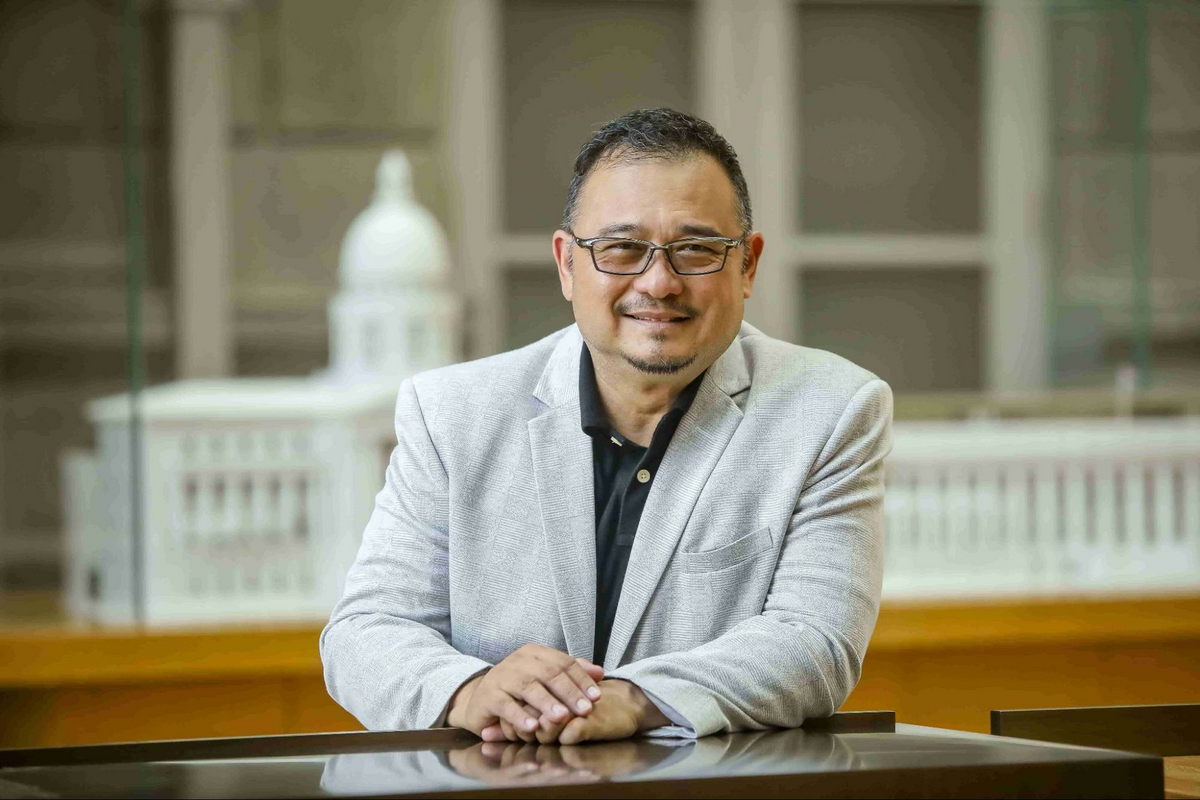
About Sean Baptist
SketchUp APAC Leader Sean leads the adoption of SketchUp and Trimble’s Connected Construction solutions across Asia, Australia, and New Zealand. He is passionate about leveraging technology to transform the built environment. His work advances ecosystem stewardship by integrating tools, channel partners, and processes that redefine how the AECO industry designs, builds, and operates.