Autodesk, Inc. introduced Forma Building Design, expanded cloud integrations, and AI-powered guidance to empower AECO teams with continuity and intelligence in their work. The new updates seamlessly connect early-stage schematic exploration with detailed Revit workflows, ensuring data and design intent can flow uninterrupted across the entire project lifecycle.
Design teams are not short on tools; they’re short on continuity. Project data is still too often fragmented across files, and decisions lose context as work moves from planning to design to construction, so teams spend valuable time reconnecting information instead of moving projects forward.
AECO professionals need workflows and platforms that preserve intent and carry the knowledge generated at every stage forward. This idea of design and make intelligence means that data, decisions, and lessons from planning, design, construction, and operations travel with the project instead of stopping at handover, allowing AI and automation to deliver value in context and teams to build on what came before.
These updates to Autodesk Forma and new cloud connections to Autodesk’s core portfolio are focused on changing that by removing friction. Following the company’s recent milestone of bringing construction capabilities into Forma, Autodesk is continuing to build on its vision shared at AU25 by strengthening how workflows connect across the lifecycle.
This marks another step toward a more connected AECO industry cloud—one where data flows more freely, workflows stay aligned, and outcomes are clearer from the beginning.
Introducing Forma Building Design
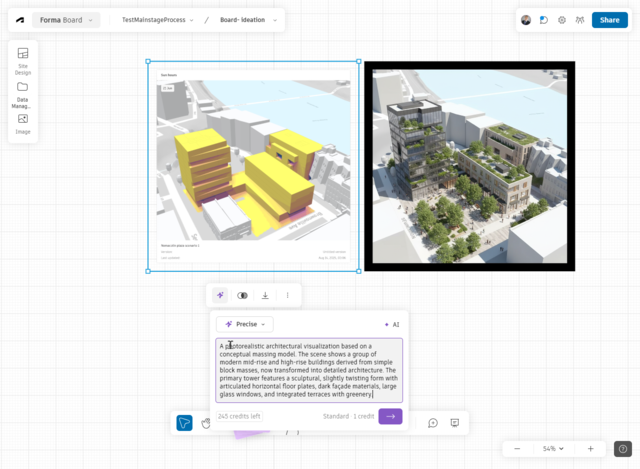
Autodesk introduced Forma Building Design, a new design and analysis offering built specifically for the schematic design phase. This is an important first step in enabling better schematic design exploration, with many powerful additions planned for Forma Building Design in the future.
Early design is where the most important decisions are made, but also where teams are often constrained. Many architects still rely on tools built for later stages, making it harder to explore options quickly and confidently before committing to a direction. Forma Building Design is designed to remove that constraint.
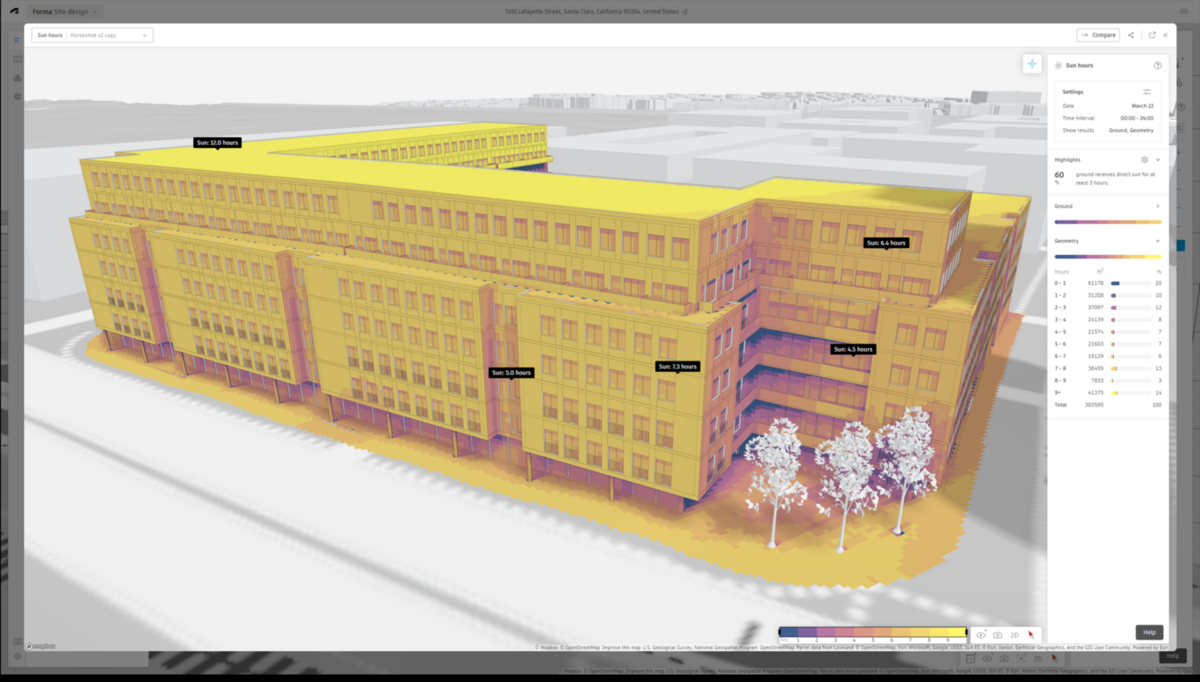
With Forma Building Design, teams can set up geolocated sites in minutes, create and detail building options with tools and design automations to add and edit facades, floor plans, and units. Architects can evaluate performance through analyses such as daylight, sun hours, and carbon. When a design direction is selected, projects move into Revit as geolocated, native models—complete with site context and building elements—reducing rework and preserving intent.
This is a complementary workflow by design: Forma Building Design for exploration and decision-making, and Revit for detailed design and documentation. This helps reduce the gap between early exploration and detailed design, allowing teams to carry decisions forward instead of recreating them later in the process.
“Arcadis has been collaborating closely with Autodesk on the development of Forma Building Design, and it’s showing real potential to connect early-stage and detailed design workflows,” said Sandra Petkute Roberts, Solutions Consultant – Major AEC Platforms at Arcadis. “Forma Building Design is making it easier for us to explore more facade and layout ideas without heavy manual effort or in-depth expertise in more complex tools. With the potential to scale well across different teams and regions, Forma Building Design makes early design exploration more accessible for our designers during the schematic design process.
For deeper carbon analysis, Forma Carbon Insights is now available across Forma Building Design and Revit to help teams better understand carbon impacts in early-phase workflows and carry those insights into detailed design. This makes it easier for teams of all sizes to participate in sustainability efforts and make informed decisions around reducing a building’s overall carbon footprint.
Expanding Connections between Forma and Revit
This launch also introduces Revit as the first Forma Connected Client, now available in Tech Preview. This designation reflects a deeper integration between Autodesk’s core products and the Forma industry cloud. It allows teams to continue working in the tools they trust while tapping into more connected, cloud-based workflows.
With the Tech Preview, teams can move data from Forma Site Design and Forma Building Design into Revit without manual file exchanges, reducing rework and improving alignment as designs evolve. Contextual data from the Forma Data Marketplace can be added to projects in just a few clicks, and environmental analysis can be performed directly within Revit as design decisions are being made. This is an important step in Autodesk’s broader Forma Connected Clients initiative, which will continue to expand across additional desktop solutions over time.
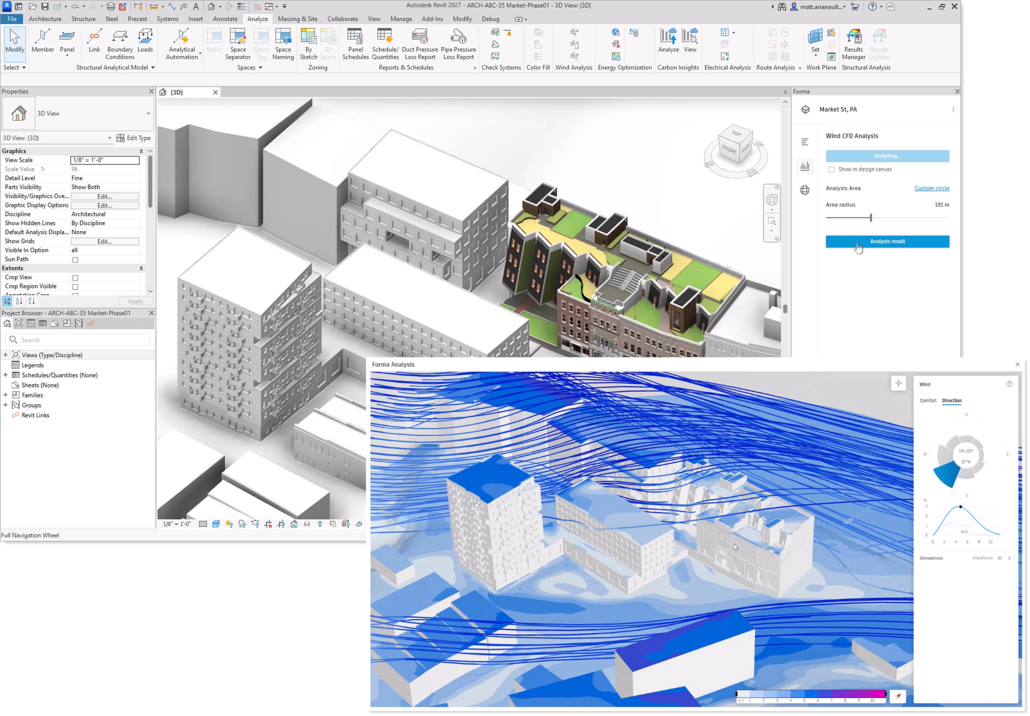
All Revit subscribers will now have access to Forma Site Design, Forma Building Design, Forma Board, and Forma Data Management Essentials. This expanded access brings AI-powered planning, early design, collaboration, and connected data workflows into a more unified experience.
Autodesk will also continue to extend cloud-connected workflows to desktop-first users. As recently announced, Forma Data Management Essentials is now available to standalone subscribers of AutoCAD, Revit, and Civil 3D—providing a simple, no-cost entry point into shared, up-to-date project data and improving coordination from the start.
And Forma Board is now included within Forma Data Management and Forma Data Management Essentials, helping teams stay aligned through visual collaboration across every stage of a project. By keeping feedback, ideas, and project context in one place, teams can stay aligned from early design through project delivery without losing context along the way.
Together, these updates reflect a broader shift toward connected workflows, where information flows more seamlessly and decisions carry forward across each phase of a project.
AI-powered Assistance in the Flow of Work
With AI rapidly reshaping how work happens across AEC, Autodesk is helping its customers to better access AI-driven insights in the tools they use every day.
Autodesk Assistant in Revit is now available, bringing contextual, AI-powered guidance directly into Revit. Designed to work with existing models, workflows, and industry-specific context, Autodesk Assistant can help execute tasks and orchestrate actions across Autodesk products, not just answer questions.
This is part of the continued rollout of Autodesk Assistant across Autodesk’s AEC portfolio. Now available in Tech Preview, Autodesk Assistant capabilities across AutoCAD, Civil 3D, and InfoWater Pro deliver intelligent, in-context guidance built into the tools that teams already use, helping teams identify issues earlier and maintain consistency and quality across their designs.
Further Strengthening the Core
Alongside the updates to Forma and Revit, Autodesk is introducing additional enhancements that strengthen connected workflows across its AEC portfolio and help teams stay aligned as projects grow in complexity.
- In AutoCAD, Checkout introduces a new way to collaborate on shared DWG files in Forma Data Management. Instead of locking entire drawings, users can reserve only the geometry they need, work in parallel within isolated editing environments, and safely merge changes back to the source file—reducing conflicts while maintaining control.
- In Civil 3D, enhancements focus on accelerating infrastructure design through optimised performance, intelligent automations, and insights powered by Autodesk AI. This includes capabilities like Horizontal Regression Analysis which can now use pre-trained ML-powered detection methods and generate consistent alignment results for linear infrastructure.
- And across its water portfolio, Autodesk is advancing its integration with Esri, which now serves as the GIS system of record across Info360 Asset and Info360 Insight. This alignment helps utilities work from a consistent, authoritative data environment, reducing reconciliation and improving data integrity across planning and operations.
- Network Design in InfoWorks ICM now brings catchment-wide design into the same environment as analysis, enabling a single workflow for planning and validating storm and sewer networks.
Looking Ahead
At the centre of these updates is a shift in how work moves across the project lifecycle and how context, decisions, and project intelligence are carried forward.
By connecting workflows across Forma and Revit and bringing project data into a shared, cloud-connected environment, teams can move beyond file-based handoffs and work with greater continuity from planning through detailed design. Across even the most complex building and infrastructure projects, this cloud-connected approach helps teams start earlier, stay aligned as decisions evolve, and design with greater clarity and confidence.
The idea of design and make intelligence treats knowledge as a persistent resource that travels with the project instead of ending at handover. Delivering it is a platform-level capability: it requires product depth across design, construction, and operations and a training asset grounded in decades of real projects. When intelligence is continuous, AI works in context, offering guidance informed by real-world outcomes, automations that augment teams, and analytics that make building performance visible and actionable. It reframes the “I” in BIM from a static snapshot to a living, compounding resource.
These updates announced today are a meaningful step forward that will not only help Autodesk customers deliver stronger outcomes, but will also continue to move the industry toward a more connected, data- driven future. Moving ahead, Autodesk will continue to explore new AI capabilities within Forma, including Building Layout Explorer for Forma Site Design, which will help teams generate and evaluate floor plan options quicker.