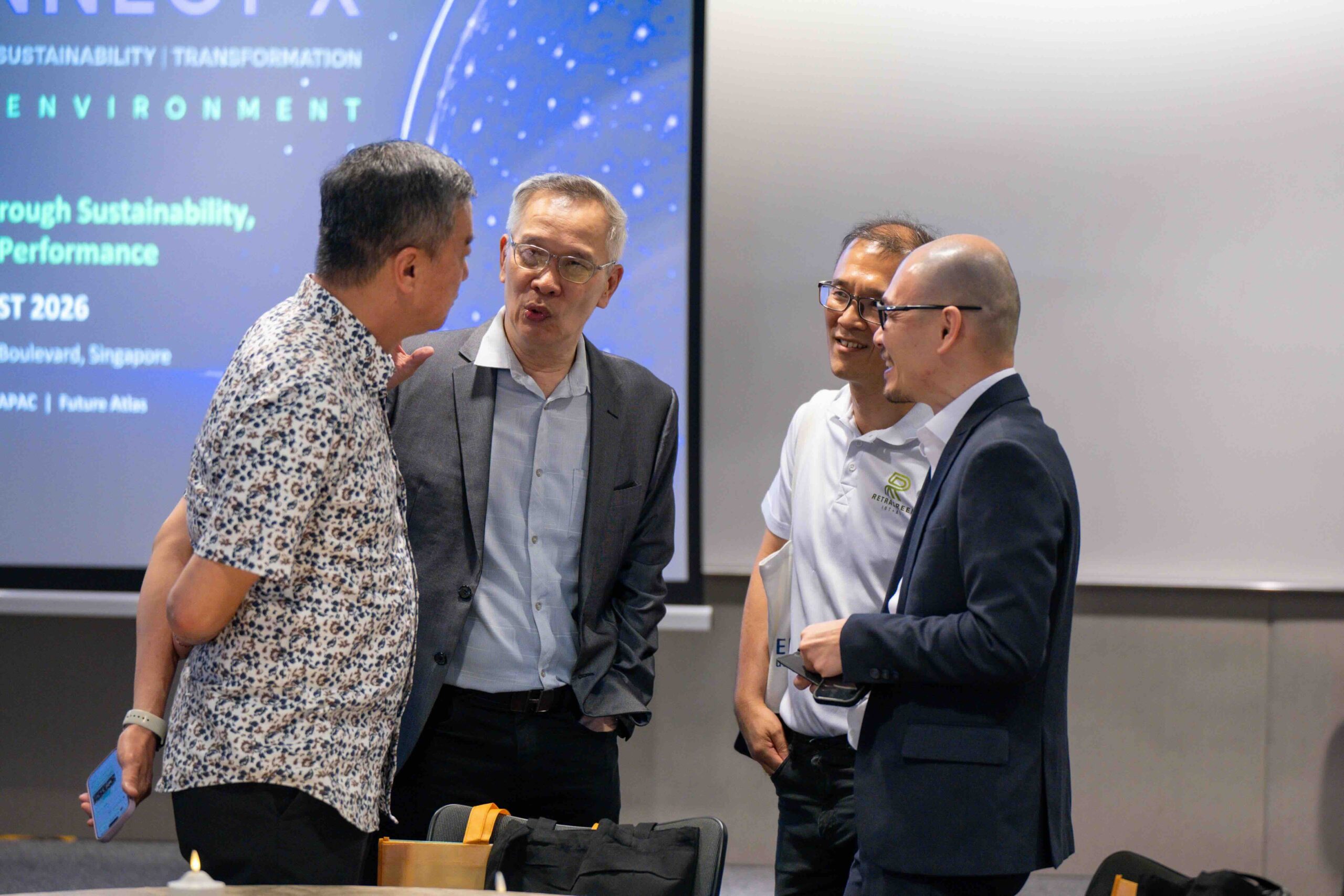
Who pays for sustainability over the long term? What problems should technology solve? How must businesses and people adapt as the industry changes? These were among the questions raised at Connect-X 2026, an executive evening briefing held at NTUC Centre in Singapore on 14 August 2026.
Organised by Quantum APAC and The Future Atlas, the inaugural event brought together practitioners across development, architecture, design, technology, materials and business transformation. Across the programme, speakers tested sustainability and technology against practical considerations: whether a decision addresses a real problem, improves the way a business or project works, and creates value over time.
“Connect-X was built on the belief that challenging market conditions call for stronger connections, honest conversations and a shared commitment to action,” said Nish P. K. N., Executive Director and Founder of Quantum APAC. “The value of the evening extended beyond the stage. It was present in the exchange of experience, the questions being asked and the new relationships formed.”
The programme opened with an address by Allen Ang, BBM, Executive Vice President and Head of Green Building, Decarbonisation and Safety at City Developments Limited. Ang asked: “How do we build better, work smarter and create more value with less?” His address considered how businesses could reduce carbon, energy, waste and manpower while improving performance. It linked sustainability to direction, technology to useful tools and collaboration to scale, with people responsible for putting each into practice.
In his keynote, Sustainability, Cost Pressure & Commercial Decision Making, Chew Teck Soon examined sustainability through the question of who bears the cost of present consumption and deferred investment. Using four building cases, he showed how decisions made today can shift costs to future owners, users or the wider public. He also proposed closer scrutiny of sinking-fund schedules so that future liabilities are recognised before failures occur. He concluded, “The money always gets paid. The only question is by whom, and when.”
Jean Leong’s presentation on behalf of Main Partner Goodrich Global brought the focus on long-term value into material selection. Leong, Regional Head of Marketing and Branding Communications, used project examples to explain how material choices affect environmental performance, aesthetics, durability and commercial value. Her examples included choosing different carpet constructions for different uses, applying digital printing to bespoke surfaces and integrating acoustic performance into material solutions. Her practical recommendations included considering lifecycle costs, selecting materials for their intended application and involving material specialists earlier in the design process. Leong closed her presentation with: “Every material decision is more than a design decision. It is a business decision.”
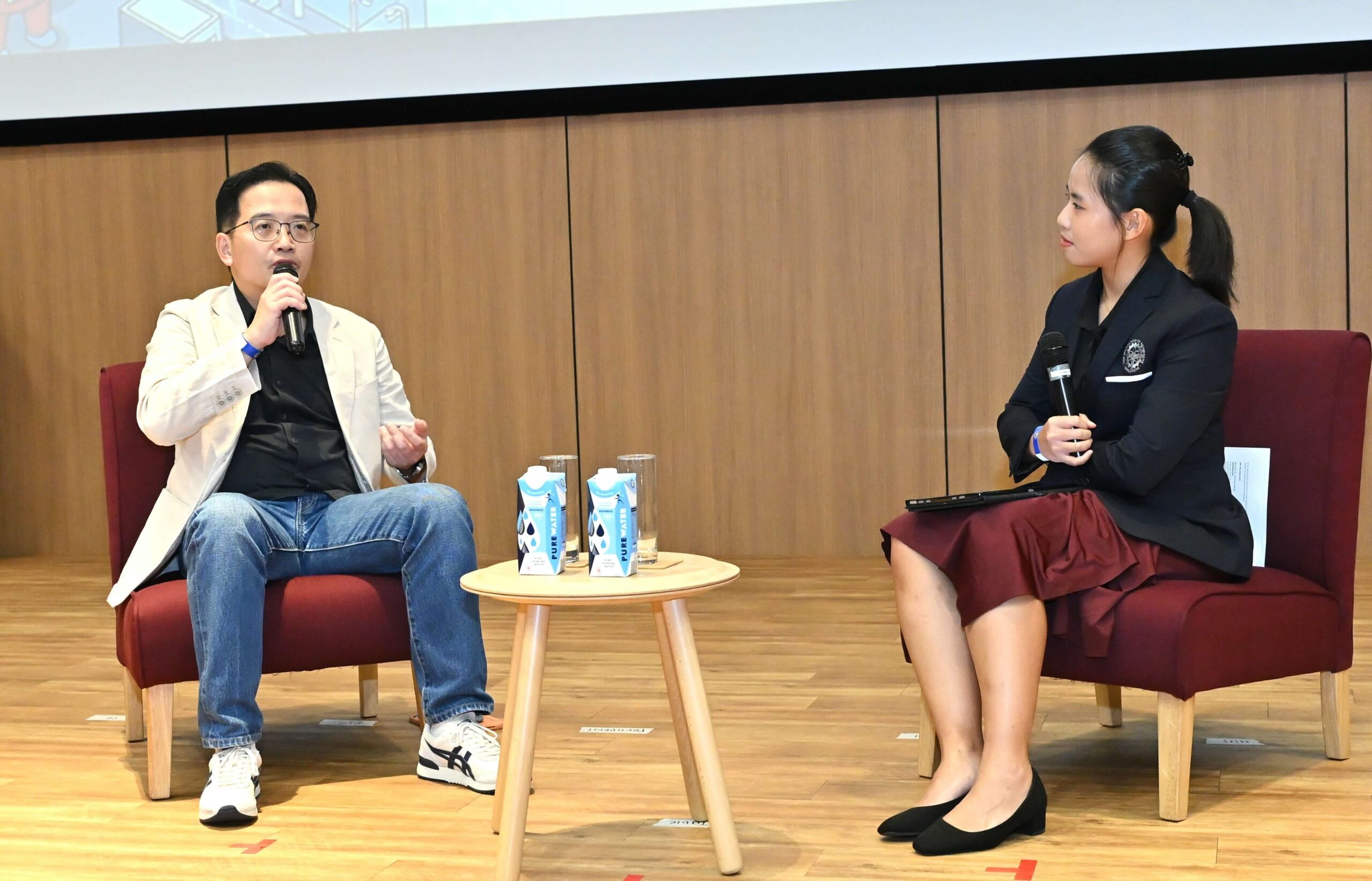
The realities of organisational change were explored during a fireside discussion with Serene Kwok, Founder and Chief Transformation Strategist at Bluehive Consulting. The discussion was facilitated by Candice Lim, Regional Director, Editorial & Content Strategy at Quantum APAC and Founder of The Future Atlas. Drawing on her work with small and medium-sized businesses, Kwok discussed how duplicated work, fragmented information, inconsistent processes and misaligned management priorities can impede transformation. Technology may form part of the response, but the starting point is understanding how the business currently operates and what needs to improve. She summarised the approach in three steps: “Start with the problem. Improve the process. Then decide on the technology.”
The panel discussion, Rethinking Growth: Building Sustainable, Competitive and Future-Ready Businesses, was moderated by Muhammad Khalil Shaiful, Senior Vice President, Group Technology Office at Boustead Singapore. Panellists ID1. Lauren Ang, Managing Principal of Adapt D&B; Webb Poh, Founder of BuiltChat; and Ar. Lin Hongsui, Director of ID Architects, discussed technology and AI, workforce readiness, skilled labour shortages and the practical demands of business transformation.
AI and digital systems were considered as tools that can support decisions, productivity and project delivery. Design still depends on creativity, professional judgement and accountability, together with the physical and tactile experience of being present in a space. The discussion also considered the demands facing young designers entering practice. They need patience to work through difficult assignments and see them through, while becoming familiar with the tools and working methods they encounter after graduation. Their design education provides the foundation; changing digital and AI-enabled workflows make continued learning and adaptation part of professional practice.
The presentation programme concluded with Context Beyond Borders by Yun Wai Wing, Director of SPARK Architects. Through projects undertaken across the region, Wing showed how design decisions must respond to local climate, regulation, delivery conditions, user expectations and cultural context as architectural practices work across different markets.
Attendees also valued the composition of the room and the opportunity for exchange. Vinson Chua, Co-founder of Lumani Pte Ltd, noted the quality and breadth of participation, spanning industry stakeholders and ecosystem providers. Lin Jun Yao of Chan & Chan Engineering said the evening created opportunities to reconnect with familiar colleagues, meet new people and think more deeply about the industry.
“We learnt a great deal from our first Connect-X,” said Lim. “Friday gave us a clear answer: the idea was relevant, it resonated and there is every reason to take Connect-X further.”
Goodrich Global was the Main Partner for Connect-X 2026. Sika and Wynist were Strategic Partners. ARDEX Quicseal, Breezway, Climate Asia, Dow, Hunter Douglas and Leetsteel supported the event as Supporting Partners. Bluehive Consulting was the event’s collaborator.