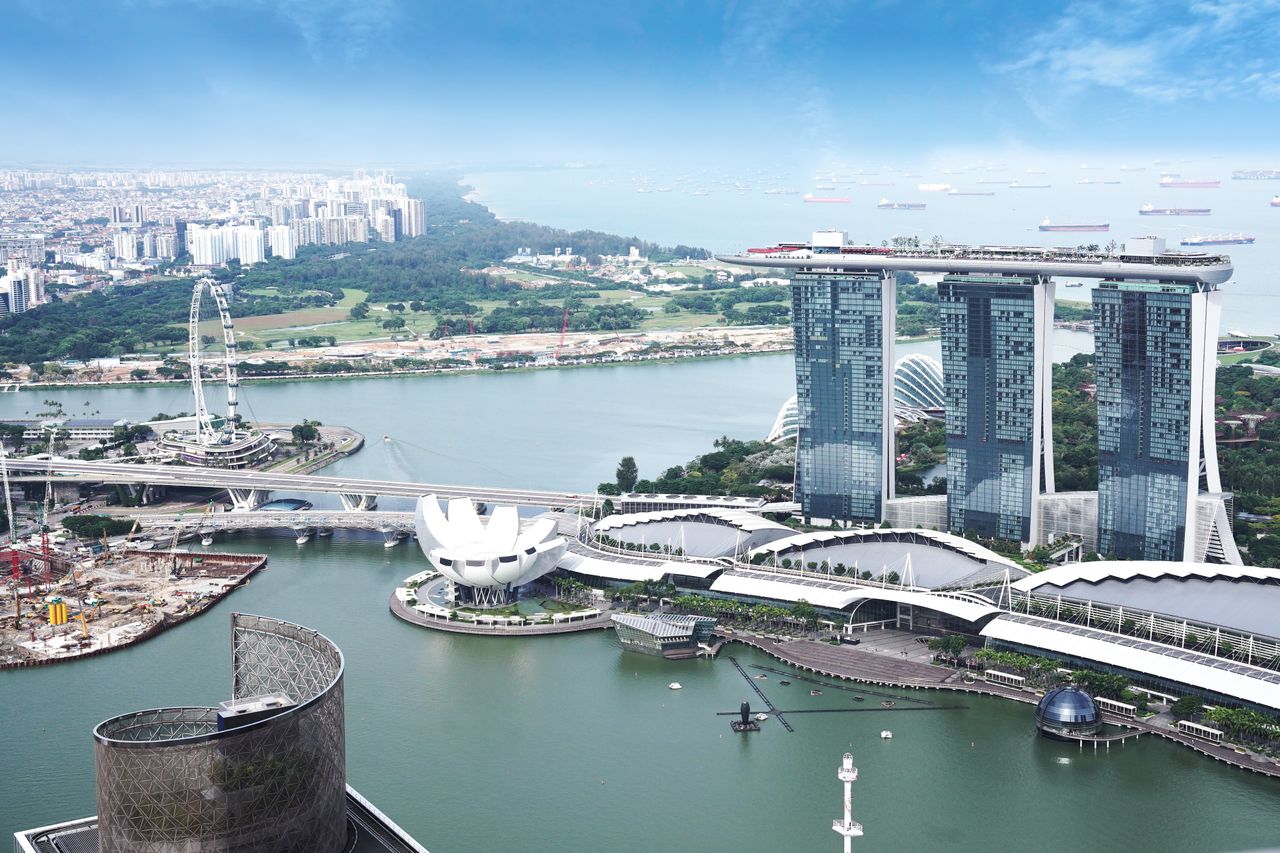
Singapore ranks 10th globally in the Savills Material Reuse Maturity Index, which assesses major office markets worldwide based on recovery and re-use rates, the presence of companies and facilitators to deliver the process, and the presence of supportive local regulations or policies. Singapore is the only Asian city in the top 10, ahead of Tokyo, which ranked 15th. The Singapore government has pushed for greener infrastructure and buildings, with 80 percent of the nation’s buildings targeted to meet sustainability standards by 2030.

Against this backdrop, Robinson Point (39 Robinson Road), originally constructed and completed in 1997, is currently undergoing an asset enhancement initiative (AEI) to meet Grade A office standards. The mixed-use retrofit project will enhance natural light and incorporate green features.
This project reflects two key trends preoccupying the owners of older commercial buildings. First, the decarbonisation goals of national governments have pushed regulators and cities worldwide to ratchet up sustainability requirements for offices. Second, occupiers, faced with their own net zero commitments, increasingly require offices with high environmental performance and are often willing to pay a premium to get them.
Vincent Lau, Executive Director, Project Management, Savills Singapore, says: “At a time when cost discipline and sustainability are both front-of-mind, material reuse is becoming a strategic lever rather than a niche initiative. For building owners in Singapore, this means retrofit and redevelopment decisions can now unlock both immediate capex savings and long-term asset value, while aligning with tightening ESG expectations.”
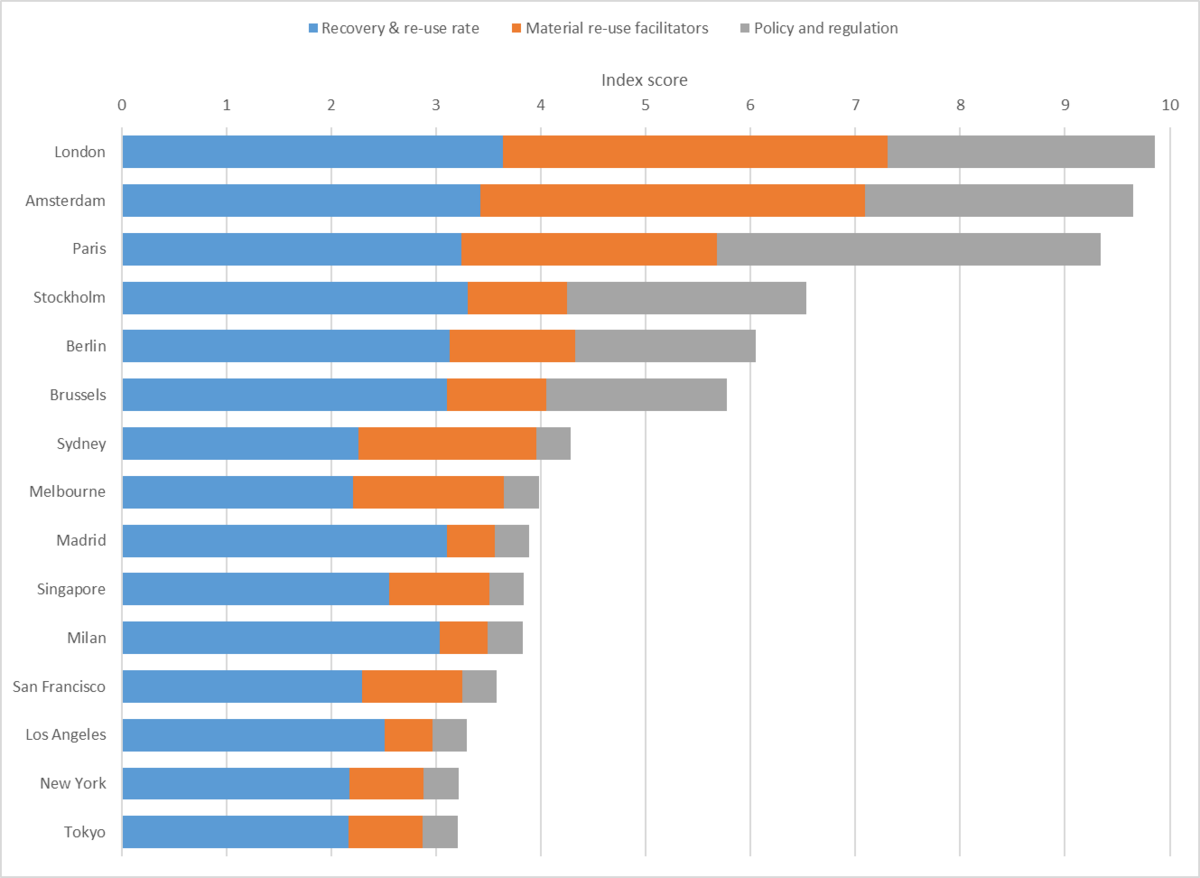
Around the world, the top three cities in the Savills Material Reuse Maturity Index – London, Amsterdam and Paris – demonstrate that the circular reuse of materials is advancing and helping to reduce the embodied carbon of office redevelopments. As local ecosystems for recovering and trading reclaimed materials mature, redevelopment can become a more carbon-competitive option in some cities.
However, a retrofit remains the best option in most cases to reduce offices’ embodied carbon, and the cost of a deep retrofit or full redevelopment project remains substantial, although in the long-term, the latter may deliver rental uplifts to help offset the investment. The scarcity of premium office space in some markets means that high-quality deep retrofits can command significant rent increases. For example, successful projects outperformed average rental growth by 57 percent in Madrid and 67 percent in New York over an average four-year time frame.
Sarah Brooks, Associate Director in Savills World Research, comments: “When considering a retrofit against a redevelopment, building owners balance many factors including capital expenditure, length of vacancy, planning risk, exit yields and potential rental increases. While a building optimisation programme or a light-touch retrofit to meet immediate compliance and occupier requirements may cost under 2 percent of the building’s value for the latter or 3-6 percent for the former, the costs and risks of other interventions – such as deep retrofit or a full redevelopment – are significantly higher, although the rewards can be greater too.”
Joanna Conceicao, Director, Savills Earth, adds: “Office owners are faced with an enormous upgrade challenge to get their stock in line with regulatory requirements and market expectations. In many markets, the majority of overall office stock is at risk of non-compliance with upcoming or proposed minimum energy performance standards. Western European markets face a more immediate challenge, reflecting a relatively older stock profile and more stringent legislation on the horizon. Elsewhere, these challenges will rise up the agenda as stock ages and policies evolve. While retrofitting is still the right solution for most existing buildings in terms of whole-life carbon, it’s encouraging that several major cities are advancing circular material economies which will help close the carbon emissions gap on projects where redevelopment offers the most adaptable and long-term resilient option.”